
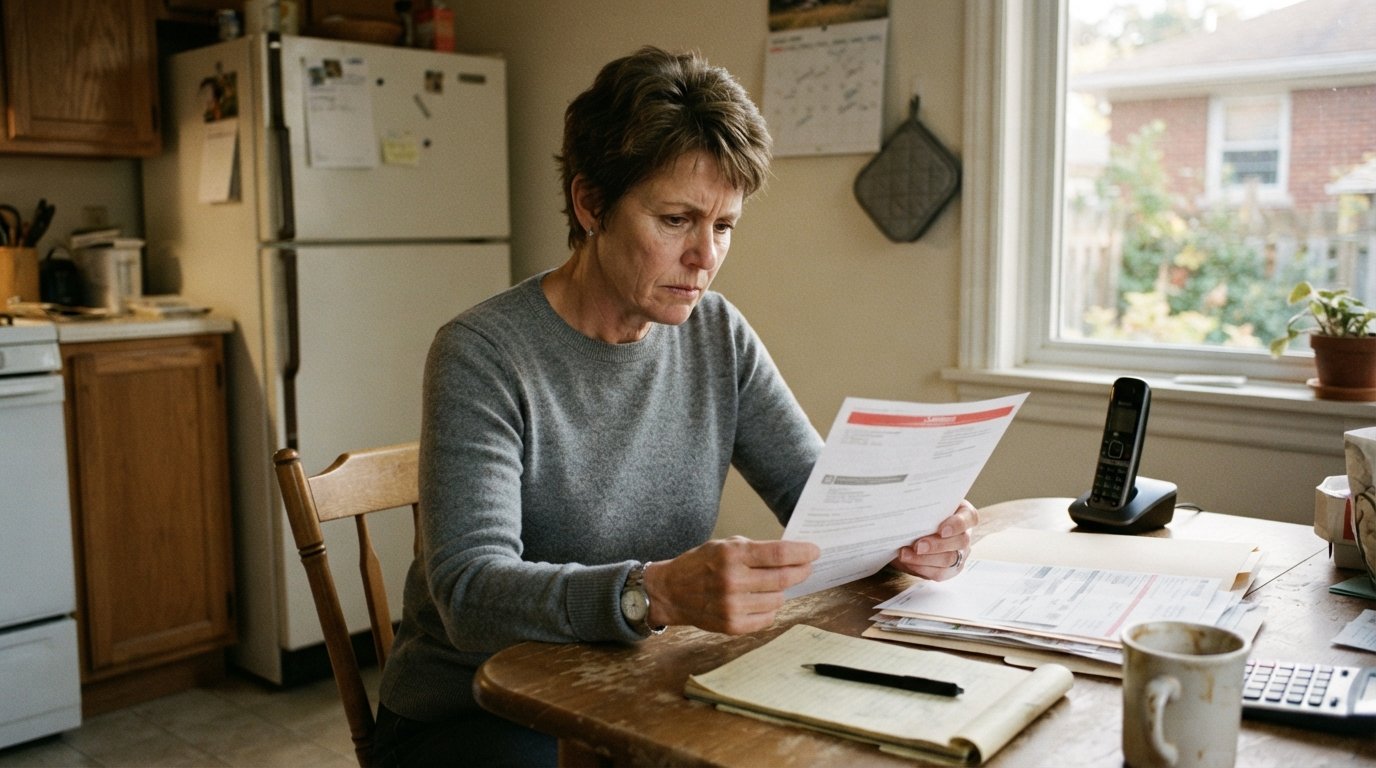
Utility Shutoff Notice: What to Do Before the Deadline
A utility shutoff notice starts a countdown. Learn how to negotiate with the utility, find energy assistance, and use a short-term loan as a last-resort bridge.

By Laura Lawson
The envelope looks official, and the red warning text is hard to miss: your electricity or gas will be disconnected on a specific date unless you pay a past-due balance. Maybe it is three days away. Maybe it is ten. Either way, the clock is running, and the worst move is to shove the notice into a drawer and hope the problem resolves itself. A utility shutoff notice what to do before the deadline is less about panic and more about sequence: make the right calls in the right order, document everything, and protect your household from a preventable disconnection.
This guide walks through a practical plan for the days between receiving a shutoff threat and the final cutoff date. You will see how to negotiate with the utility, where to find energy assistance money, when borrowing makes sense as a bridge, and how to prevent the same crisis from repeating next season. The steps below are written for renters and homeowners alike, because a shutoff affects everyone in the household regardless of who holds the account.
Day One: Read the Notice Carefully and Call the Utility
Before you call anyone, read the entire notice line by line. Shutoff warnings are required to include specific information: the amount owed, the disconnection date, the phone number for the utility's collections department, and often a statement about your right to request a payment arrangement or apply for assistance. Some notices also list a deferred payment plan deadline or a medical certification option for households with vulnerable members. Write down the account number, the exact past-due amount, and any fees that have been added, because the total on the notice may differ from what you expected.
Then call the utility, and call the number printed on the notice rather than a general customer service line. When you reach a representative, be direct: state that you received a shutoff notice, that you want to keep service on, and that you want to know every option available on your account. Ask specifically about three things: a payment extension, a installment plan for the past-due balance, and any hardship or assistance programs the utility administers or partners with. Utilities are often more flexible than their notices suggest, especially for first-time delinquencies or customers with a history of on-time payments.
Come to the call prepared with concrete numbers. If you can pay half the balance now and the rest in two weeks, say so. A specific proposal is far more persuasive than a vague promise to pay soon. If the representative offers a plan, ask them to email or text you the confirmation and the new due dates before you hang up. Verbal agreements are common, but written confirmation protects you if the account later shows as delinquent in error.
If you are renting, contact your landlord the same day. In many jurisdictions, the account holder is the landlord, and a shutoff notice may be the first sign that the property owner has fallen behind on the building's utility bill. You have rights in that situation, and quick communication creates a paper trail.
Tap Into Energy Assistance Programs Before You Borrow
Millions of households qualify for help they never claim, largely because the programs are scattered across federal, state, and local agencies with different names and application processes. The largest is the Low Income Home Energy Assistance Program (LIHEAP), a federal block grant that states distribute through local community action agencies. LIHEAP can cover a portion of your current bill, pay a past-due balance, and in some states fund emergency crisis assistance when a shutoff is imminent. Crisis funds are often released faster than standard applications, sometimes within 24 to 48 hours, which matters when your deadline is days away.
Beyond LIHEAP, several other layers of help exist. The Weatherization Assistance Program reduces long-term energy costs through insulation and efficiency upgrades, though it will not stop an immediate shutoff. Many utilities run their own hardship funds, fuel funds, or shareholder-funded assistance programs, and some states require utilities to offer percentage-of-income payment plans that cap your bill at a set share of household income. Local charities, faith-based organizations, and community action agencies frequently hold small discretionary funds for exactly this kind of emergency.
Here is a practical checklist for finding help quickly:
- Search your state's LIHEAP agency directory and call the local community action agency directly, asking specifically for crisis assistance.
- Ask the utility representative which hardship funds or payment plans they administer and request an application by email.
- Call 211, the national social services hotline, to be routed to local emergency utility funds in your area.
- Check with your city or county government, since many municipalities run emergency assistance programs separate from state agencies.
- Ask veterans' service organizations, religious congregations, and local mutual aid groups, which often keep small emergency funds for neighbors.
Gather your documents before you apply: proof of income for the past 30 days, your most recent utility bill, identification, and proof of residence. Missing paperwork is the most common reason assistance applications stall, and a stalled application will not beat a disconnection date. If you cannot complete an application before the deadline, tell the utility that you have applied and ask for a short hold on the shutoff while the agency processes your case. Many utilities will pause collection activity once they receive confirmation that an assistance application is pending.
For a deeper look at how Michigan residents navigate these notices, including state-specific timelines and resources, see this guide to handling utility shut-off notices in Michigan, which walks through the notice process step by step.
When a Short-Term Loan Is a Reasonable Bridge
Assistance programs and payment plans should always come first, because they do not create debt. But sometimes the timing does not work: the assistance check arrives after the cutoff date, the payment plan requires a down payment you do not have, or the utility will only hold the account with a partial payment today. In those narrow situations, a short-term loan can function as a bridge, covering the gap between the deadline and the money you already know is coming.
A bridge loan only makes sense under specific conditions. The amount you borrow should be limited to the past-due balance plus reconnect fees, not the entire season's bills. You should have a realistic plan to repay within one or two paychecks, and you should understand the full cost of borrowing before you sign anything, including interest, fees, and the annual percentage rate. If repaying the loan would force you to skip rent or another essential bill, the loan is not solving the problem; it is rearranging it.
For households that decide borrowing is the right move, the key is speed and transparency. Online loan connection services let you submit one request and compare offers from multiple lenders rather than applying to each one separately. Platforms like LendersCashLoan connect borrowers with a network of third-party lenders that consider a range of credit profiles, which can help when time is short and a traditional bank is not an option. ExpressCash works in the same way: it is a connection service, not a direct lender, and it matches your request with independent lenders who make their own credit decisions and set their own terms. Review every offer carefully, compare the total repayment cost, and accept only what you can realistically repay.
One more caution: never pay a fee to a company that promises to stop a shutoff on your behalf. Utility payment assistance is free to apply for, and anyone demanding upfront payment for guaranteed help is almost certainly running a scam.
Protect the Account After You Pay
Paying the balance is not the finish line. Utilities sometimes apply payments in ways that surprise customers, and a shutoff notice can linger in the system even after the money clears. Within 24 hours of paying, call the utility to confirm the payment posted, the shutoff order has been canceled, and the account status shows current. Ask for an email confirmation or take a screenshot of your online account showing a zero or agreed-upon balance. If a payment arrangement is in place, confirm the first installment date and set a calendar reminder for two days before it.
Keep the notice and all related paperwork for at least a year. If the account is later reported to a collection agency or a credit bureau in error, your documentation is the fastest way to correct it. If you paid through a third party, such as a money order or a payment app, keep the receipt until the utility confirms receipt.
Reconnection, if service was already cut, follows its own process. You will typically need to pay the past-due balance plus a reconnection fee, and some utilities require a deposit before restoring service. Ask about the timeline: many utilities restore service within 24 hours of payment, but weekends and holidays can delay crews. If anyone in the household has a medical condition that requires power, ask about medical certification protections, which can delay a shutoff in many states when documented by a health care provider.
Avoid the Next Shutoff With a Budget Plan
Most shutoffs follow a predictable pattern: a bill spikes during extreme weather, the payment is skipped once, late fees pile on, and the balance snowballs faster than the household can catch up. Breaking that cycle requires a plan that smooths out seasonal costs instead of reacting to them. The most effective tool is a levelized billing plan, which the utility calculates by averaging your annual usage into equal monthly payments. You pay the same amount in July and January, which makes budgeting far easier and prevents the winter or summer spike that triggers most delinquency.
Pair levelized billing with a small energy emergency fund. Even $20 per paycheck set aside in a separate account creates a cushion that can absorb one high bill without borrowing. Weatherization upgrades, programmable thermostats, and simple efficiency fixes lower the baseline bill over time. If your income is fixed or low, ask the utility about percentage-of-income plans, which cap your payment at a set portion of household income and are required in many states.
Finally, open every utility notice immediately, even the ones that look routine. The earlier you call, the more options you have: extensions are easier to get at day five than at day one, and assistance funds run out as deadlines approach. Households that treat a shutoff notice as a signal to act rather than a reason to worry consistently keep the lights on and avoid the fees, deposits, and credit damage that come with disconnection.
The deadline on the notice is real, but it is rarely the end of your options. Read the notice, call the utility the same day, apply for assistance before you borrow, and if you do take a short-term loan, treat it as a bridge with a clear repayment plan. Then confirm the account is current, keep your records, and set up levelized billing so the next notice never arrives. A few hours of focused action this week can protect your household for the rest of the year.