
Payday Loans vs Personal Loans: Key Differences in the US
Understanding the difference between payday loans and personal loans in the US is crucial for your financial health. This guide explains the costs, risks, and regulations to help you avoid debt traps.

By Mia Turner
When you need cash quickly in the United States, two common options often appear in search results: payday loans and personal loans. While both provide funding, they are fundamentally different financial products with consequences that can impact your financial health for years. Understanding the distinction between a short-term payday loan and an installment-based personal loan is not just about comparing interest rates, it’s about recognizing two entirely different borrowing experiences, one of which is often fraught with risk. This guide will break down the critical differences in structure, cost, regulation, and long-term impact to help you make an informed decision that aligns with your financial well-being.
Fundamental Definitions and Loan Structures
At their core, payday loans and personal loans are designed for different purposes and timeframes. A payday loan is a small-dollar, short-term, high-cost loan typically due in full on your next payday, usually within two to four weeks. The loan amount is often limited, frequently between $100 and $1,000, and is secured by a post-dated check or electronic access to your bank account. The borrower writes a check for the loan amount plus a fee, and the lender holds the check until the due date. This structure creates a single, lump-sum payment obligation that can be difficult to meet, often leading to a cycle of renewal or “rollover.”
In contrast, a personal loan is an installment loan with a fixed repayment schedule. You borrow a larger sum of money, which can range from $1,000 to $100,000, and agree to repay it with interest over a set period, typically two to seven years. Payments are made in regular, equal installments (monthly, usually) until the debt is cleared. This predictable structure allows for budgeting and planning. Personal loans are generally unsecured, meaning they do not require collateral like a car or house, though secured personal loan options do exist. This installment nature is a primary differentiator, providing a manageable path to repayment rather than a single, overwhelming financial burden.
Cost Comparison: APR, Fees, and the True Price of Borrowing
The most staggering difference between these two loan types lies in their cost, best expressed through the Annual Percentage Rate (APR). A personal loan APR can vary widely based on your creditworthiness, ranging from as low as 6% for highly qualified borrowers to 36% for those with poor credit. This interest is applied to the declining principal over the life of the loan.
Payday loans, however, operate on a fee structure that translates into an exorbitantly high APR. A typical payday loan fee might be $15 for every $100 borrowed over a two-week period. While $15 may seem manageable, when annualized, this equates to an APR of nearly 400%. In some states with fewer regulations, APRs can exceed 600%. This cost structure makes payday loans one of the most expensive forms of credit available. For a deeper analysis of which option might be more cost-effective for your specific situation, including scenarios with less-than-perfect credit, our resource on Are Payday Loans or Personal Loans Better for Bad Credit provides a detailed breakdown.
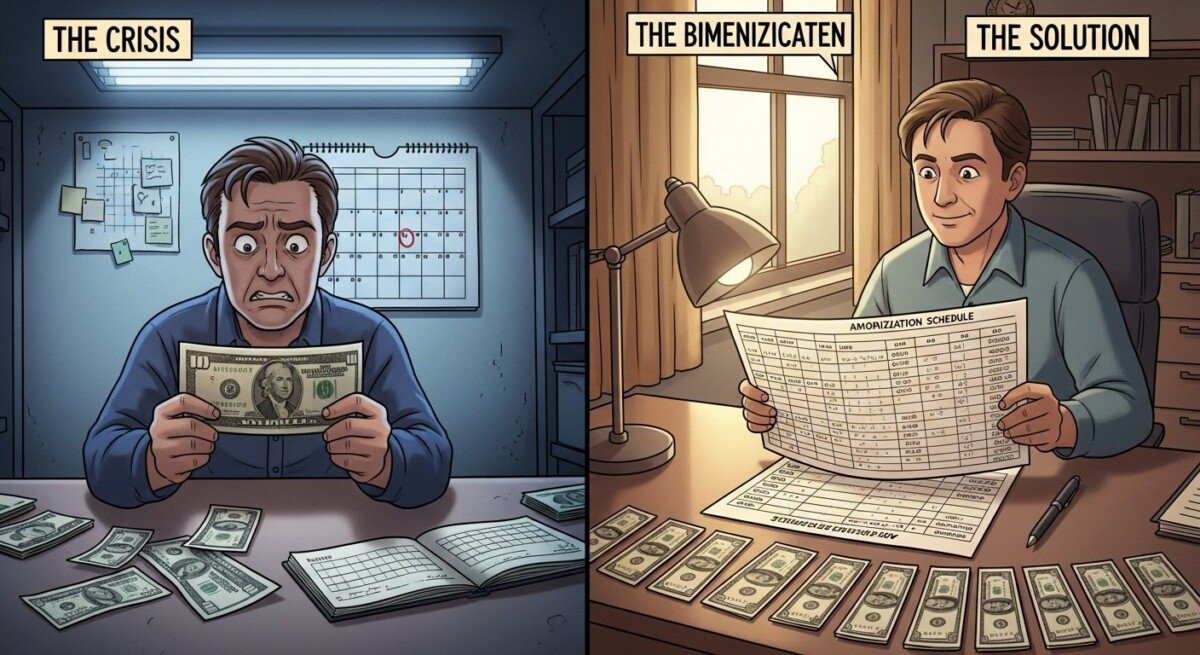
Furthermore, payday loans often trap borrowers in a cycle of debt. If you cannot repay the loan in full on your next payday, the lender may offer to “roll over” the loan, charging a new fee to extend the due date. This can lead to paying fees multiple times without reducing the original principal, a dangerous and costly spiral. Personal loans, with their amortizing schedule, are designed to build equity with each payment, steadily reducing the amount you owe.
Credit Checks, Eligibility, and Funding Speed
The eligibility requirements and application processes for these loans are polar opposites. Payday lenders typically perform no hard credit check with the major credit bureaus (Experian, Equifax, TransUnion). Their primary requirements are proof of income (like a paystub), an active checking account, and a valid ID. This makes them accessible to individuals with no credit or very poor credit scores. The application is often quick, with funding available the same day or within 24 hours. This speed and lack of credit scrutiny come at the high cost detailed previously.
Personal loan lenders, including banks, credit unions, and online lenders, almost always conduct a hard credit inquiry. Your credit score, credit history, debt-to-income ratio (DTI), and sometimes employment verification are key factors in determining both your approval and your interest rate. This process can take from one to several business days, though some online lenders now offer next-day or even same-day funding upon approval. The trade-off is clear: a slightly longer wait for a significantly more affordable and structured loan product.
Regulatory Landscape and Consumer Protections
The regulatory environment for these two loan types in the US is vastly different, reflecting their risk profiles. Personal loans are subject to federal consumer lending laws, such as the Truth in Lending Act (TILA), which mandates clear disclosure of APR and loan terms. State usury laws also cap interest rates for licensed lenders.
Payday loans are primarily regulated at the state level, leading to a patchwork of rules. Some states, like New York and Connecticut, effectively prohibit them with strict interest rate caps. Others, like California and Texas, permit them with varying restrictions on loan amounts, fees, and rollovers. The Consumer Financial Protection Bureau (CFPB) has issued rules aimed at curbing debt traps by requiring lenders to assess a borrower’s ability to repay, though these rules are subject to ongoing legal and legislative challenges. This uneven regulatory framework means the availability and terms of payday loans depend heavily on your geographic location.
Impact on Credit History and Financial Health
How you handle each loan type has profound implications for your credit score and long-term financial standing. Personal loan activity is routinely reported to the credit bureaus. Making on-time payments builds positive credit history, demonstrating responsible credit management to future lenders. Conversely, late or missed payments will damage your credit score.
Most payday lenders do not report payment activity to the major credit bureaus, unless the account is charged off and sent to collections. Therefore, successfully repaying a payday loan does not help you build credit. However, failure to repay can still severely harm your credit if the debt is sold to a collection agency. The greater risk to financial health is the debt cycle itself, which can drain income and make it impossible to meet other obligations, indirectly leading to defaults on reported debts like credit cards or mortgages. For individuals considering a payday loan for a sudden cash shortfall, it is crucial to explore all alternatives; understanding your options is the first step, as discussed in our guide to Emergency Payday Loans and fast cash alternatives.
When to Consider Each Option (And Safer Alternatives)
Given the extreme costs, a payday loan should only be considered as an absolute last resort for a genuine, one-time emergency when you have exhausted all other options, you are certain you can repay it in full on the due date, and you understand the full terms. Even then, extreme caution is warranted.
A personal loan is a more appropriate tool for planned or larger financial needs. Common uses include debt consolidation (replacing high-interest credit card debt with a lower-interest loan), home improvement projects, major purchases, or unexpected but sizable expenses like medical bills. The fixed payments and longer term make it a predictable and manageable financial tool.
Before resorting to either, consider these safer alternatives:
- Negotiate with Creditors: Contact bill providers to request a payment plan or extension.
- Community Assistance Programs: Local non-profits, religious organizations, or community action agencies may offer emergency assistance for utilities, rent, or food.
- Payment Advance Apps: Services like Earnin or Dave allow access to earned wages before payday for a low or optional fee.
- Credit Union Payday Alternative Loans (PALs): Federally-chartered credit unions offer small-dollar loans with APRs capped at 28%, a far better option than a traditional payday loan.
- Side Work or Gig Economy: Generating additional income, even temporarily, can bridge a gap without creating debt.
Frequently Asked Questions
Can a payday loan help me build credit?
Typically, no. Most payday lenders do not report your repayment activity to the three major credit bureaus. The only likely credit impact is negative, if you default and the debt goes to collections.
What is the main risk of a payday loan?
The primary risk is the debt trap cycle. The high fee and short term make it difficult to repay, leading to loan renewals or rollovers where you pay fees repeatedly without reducing the principal, ultimately paying far more than you originally borrowed.
Is it easier to get a payday loan or a personal loan?
Payday loans have much lower eligibility barriers (income and a bank account) and require no credit check, making them easier to obtain quickly. Personal loans require a credit check and stricter eligibility, making the process more involved but resulting in a far more affordable product.
What should I look for in a personal loan offer?
Focus on the APR (which includes interest and fees), the monthly payment amount, the loan term, and any origination or prepayment fees. Ensure the payment fits comfortably within your budget. A comprehensive comparison of payday loans and personal loans can help you evaluate which loan features matter most for your financial scenario.
Are online personal loans safe?
Loans from reputable, established online lenders are generally safe. Ensure the lender is licensed in your state and clearly discloses all fees and the APR. Check for reviews and verify their physical address and customer service contacts. Never pay an upfront fee for a “guaranteed” loan, as this is a common scam.
Choosing between a payday loan and a personal loan is a decision with significant financial ramifications. The former offers fast, easy cash at a catastrophic cost, often leading to long-term financial damage. The latter requires more qualification but provides a structured, affordable path to borrowing that can even improve your credit over time. By prioritizing the installment model of a personal loan, or better yet, exploring alternative sources of emergency funding, you protect your financial future and avoid the predatory cycle that traps millions of Americans each year. Always read the fine print, calculate the total cost of borrowing, and choose the option that supports your long-term stability, not just an immediate need.