
Budgeting for Unexpected Home Repairs Without a Loan First
Stabilize the repair, tap cash flow and savings, and only then consider financing. A practical sequence for budgeting for unexpected home repairs without a loan first.

By Thomas Shaw
A pipe bursts behind the washing machine at 2 a.m. The furnace dies during the first cold snap of the year. The roof starts leaking directly above your bed. Unexpected home repairs rarely announce themselves, and they almost never arrive at a convenient time. The immediate question is not whether you can afford a full renovation, it is how you will cover the repair without derailing your entire financial life. Many homeowners instinctively reach for a loan, but borrowing should be the last step in a deliberate sequence, not the first reflex. This guide walks through a practical framework for budgeting for unexpected home repairs without a loan first, so you can preserve cash flow, avoid unnecessary interest, and only consider financing when it genuinely makes sense.
Start With Triage: Safety, Temporary Fixes, and Real Quotes
Before you think about money, you need to understand the scope of the problem. Triage is about separating a true emergency from an inconvenience and preventing a small issue from becoming a catastrophic one. The first question is always safety. If the repair involves electrical hazards, gas leaks, structural instability, or sewage, stop and call a licensed professional immediately. No amount of budgeting matters if someone gets hurt or the damage spreads. For everything else, the goal is to stabilize the situation at the lowest possible cost while you gather information.
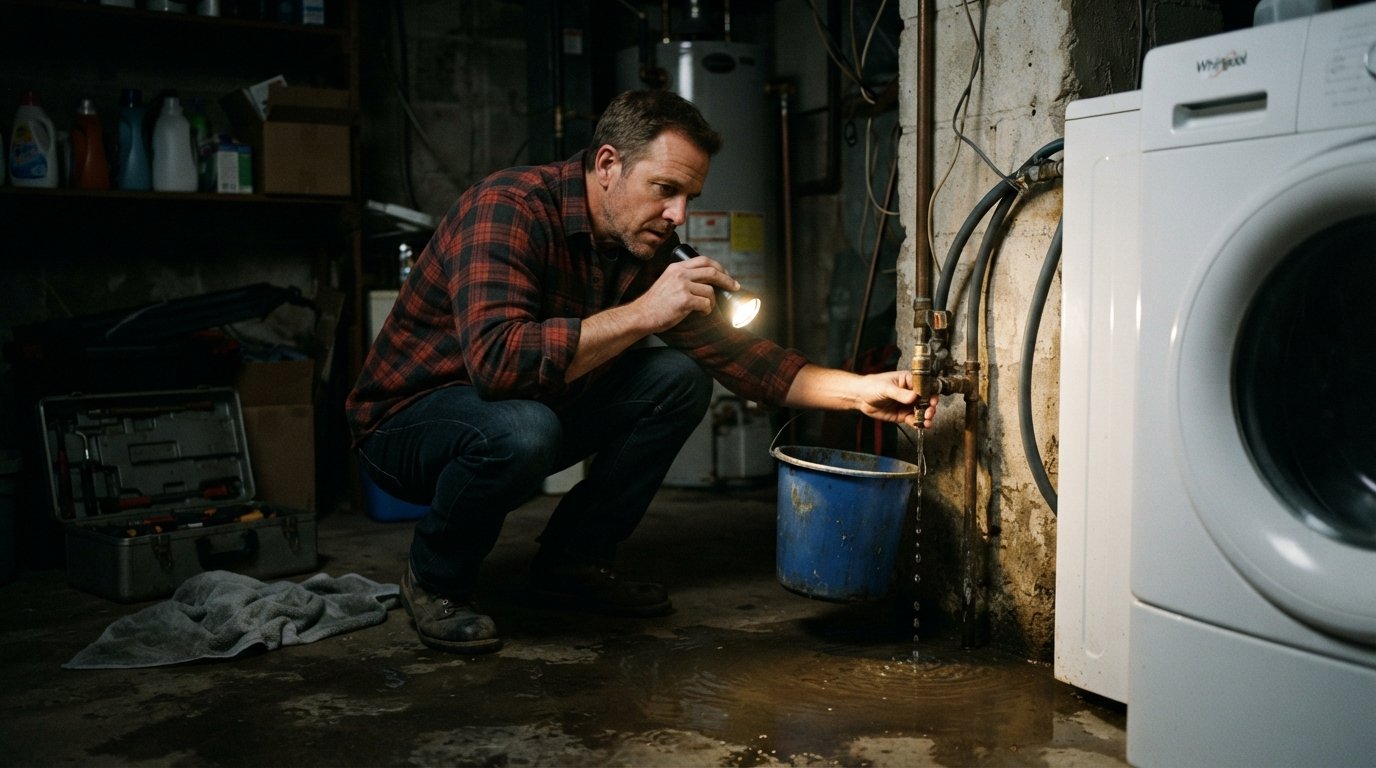
Temporary fixes are your best friend during this phase. A bucket under a leak, a shut-off valve, a tarp on a damaged roof, or a space heater in a cold room can buy you days or weeks to make a reasoned decision. Document everything with photos and receipts, because your insurer may reimburse some of these costs and you will want a clear record. Once the situation is stable, get at least three written quotes from licensed contractors. This step does two things: it tells you the real cost range, and it gives you leverage to negotiate. A verbal estimate is not a budget number, it is a guess. Written quotes with itemized labor and materials are the foundation of any repair budget.
While you collect quotes, ask each contractor what can be deferred safely. Sometimes a full replacement can wait a season if a partial repair holds. Other times, deferring a cheap fix guarantees a much larger bill later. A good contractor will tell you the difference. Use this triage period to build a realistic number, because every subsequent decision depends on knowing whether you are facing a $400 fix or a $4,000 project.
Cover Smaller Repairs From Cash Flow Before Borrowing
Once you have a real number, the next step is to see how much of it you can absorb without borrowing. For repairs under a few hundred dollars, your regular cash flow is often the best source. This means adjusting your monthly spending temporarily, not permanently. Look at discretionary categories like dining out, subscriptions, entertainment, and non-essential shopping. A short, focused spending freeze can free up several hundred dollars in a single month. The key is to make the freeze specific and time-bound so it feels manageable rather than punitive.
Your emergency savings is the next stop, assuming you have one. Many financial advisors suggest keeping one to three months of living expenses in a dedicated account, but even a modest cushion of $500 to $1,000 can cover most minor repairs. If your savings account is thin, do not drain it completely. Keeping at least a small buffer protects you from a second emergency arriving before you have rebuilt. If the repair exceeds your savings, ask the contractor about payment plans. Many established contractors offer short-term installment arrangements, sometimes interest-free for 30 to 90 days. This is essentially a loan from the business, but it often comes with fewer fees and less paperwork than a formal loan product.
Here are the most common sources to tap before any formal borrowing, roughly in order of preference:
- Current month cash flow adjustments (temporary spending freeze)
- Emergency savings account (keep a minimum buffer)
- Contractor payment plans or staged billing
- Insurance claim (if the damage is covered)
- Sale of unused items or a short-term side income push
Insurance deserves special attention. Review your policy before assuming a repair is out of pocket. Sudden damage from storms, bursts, or accidents is often covered, while maintenance issues typically are not. Filing a claim can raise your premium, so weigh the deductible against the repair cost. If the repair is close to your deductible, paying out of pocket may be smarter. For larger covered losses, the claim is usually the correct first move, and it costs you nothing but time to ask.
When a Short-Term Loan Request May Be Appropriate
Sometimes the numbers simply do not work without outside funding. If the repair is urgent, safety-related, or threatens to cause much larger damage, and your cash flow and savings cannot cover it, a short-term loan may be the practical bridge. This is especially true when the repair protects the value of your home or prevents displacement. The decision should be based on three tests: the repair cannot wait, the cost exceeds your available resources, and you have a realistic plan to repay the loan within its term.
For homeowners who pass those tests, a connection service like StartPaydayLoan can streamline the search for short-term options. It is a free online service that helps U.S. consumers submit one request and potentially get matched with third-party lenders in a network. It is not a lender and does not make credit decisions, so any terms come directly from the lender. That structure is useful when you need to compare multiple offers quickly rather than applying to lenders one by one. The same is true of ExpressCash, which functions as a connector rather than a direct lender and can match a single request with lenders who may consider a range of credit profiles. If you want to understand how personal loan applications work in general, including with imperfect credit, our guide on how to get a personal loan walks through the process step by step.
Before you submit any request, know your numbers. Calculate the total repayment cost, not just the monthly payment. Compare the annual percentage rate across offers, read the fee schedule, and confirm the repayment date aligns with your income. A loan that solves this month's problem but creates a crisis next month is not a solution. Only accept terms you can repay comfortably, and never borrow more than the repair requires. Loan availability varies by state, and individual lender terms differ, so review every disclosure carefully before signing.
Build a Repair Reserve So the Next Emergency Is Easier
The best time to budget for an unexpected repair is before it happens. Once the current crisis is resolved, shift your focus to building a dedicated home repair reserve. A common rule of thumb is to set aside 1 percent of your home's value each year for maintenance and repairs, though older homes and harsh climates may warrant more. For a $250,000 home, that is roughly $2,500 per year, or about $208 per month. That number can feel daunting, so start smaller. Even $50 per month builds a $600 cushion in a year, which covers many common repairs.
Automate the transfer so it happens without willpower. Treat the reserve as a fixed bill, not a leftover. Keep it in a separate high-yield savings account so it is visible but not too easy to spend. Pair the reserve with a simple maintenance calendar: change filters, inspect the roof and gutters seasonally, flush the water heater, and check for leaks under sinks. Preventive maintenance is the cheapest form of repair budgeting because it stops small problems from becoming emergency projects. Review your reserve balance annually and adjust your monthly contribution as your home ages and your income changes.
Finally, revisit your insurance coverage during this process. Confirm your deductible is an amount you could actually pay in a crisis, and ask whether adding coverage for specific risks (water backup, sewer line, or equipment breakdown) makes sense for your situation. A well-structured reserve plus the right coverage turns most future emergencies into manageable events rather than financial shocks. The goal is not to eliminate surprises, it is to make sure a surprise never forces you into a rushed borrowing decision.
Budgeting for unexpected home repairs without a loan first is ultimately about sequencing: stabilize the problem, understand the real cost, exhaust your own resources, and only then consider financing with clear eyes. That order protects your wallet, your credit, and your home. When you do need to explore short-term options, use a connection service to compare offers, read every term, and borrow only what you can repay. A calm, structured approach turns a stressful emergency into a solvable problem.